Slide Rule 短剧
To create this specific type of high-drama, tension-filled micro-drama (duanju), you need a combination of an AI video generator that handles intense human expressions/acting, a voice generator for the dialogue, and a video editor to stitch the pacing together.
Here is the best toolset and step-by-step setup to bring this specific storyline to life:
1. The Core AI Video Generator (For the Acting & Scene Creation)
Since your plot relies heavily on close-up dramatic tension (the smugness of the professor, the stress of the students, the shock of the results, and the anger of the professor throwing the paper), you need an AI tool with excellent facial expressions and realistic human physics.
- MiniMax (Hailuo AI / 海螺AI): (Highly Recommended for this plot) MiniMax is currently the gold standard for generating highly realistic Asian faces and intense cinematic acting. It understands dramatic text prompts perfectly, making it ideal for the contrast between the Chinese student and the French students in the classroom.
- Kling AI (可灵): Excellent for this because it allows Character Customization. You can upload a photo of the “Chinese Student” and a photo of the “French Professor,” lock them in as actors, and generate multiple scenes keeping their faces consistent. It also excels at physical interactions, which you will need for the climax of throwing the exam paper.
- Luma Dream Machine: Great for fast camera movements, like a dramatic zoom-in on the failed grades, or a slow-motion shot of the paper flying through the air.
2. Dialogue & Voice Acting (For the Multilingual Tension)
Your drama involves a French professor and a Chinese student, meaning the audio needs to sound authentic.
- ElevenLabs: You can generate a French-accented English voice (or pure French) for the professor to sound arrogant and dismissive, and a separate voice for the Chinese student. ElevenLabs allows you to add emotional tags like “angry,” “whispering,” or “shouting” to make the confrontation realistic.
3. The Video Editing Tool (To Put It All Together)
- CapCut (剪映): This is the ultimate tool for editing duanju. It is perfectly optimized for the 9:16 vertical smartphone format.
- Why it fits your story: You can use CapCut’s aggressive sound effects (dramatic booms for when the grades are revealed, a sharp “whoosh” when the paper is thrown). It also has excellent auto-captioning templates that are staple features of short-form dramas.
Step-by-Step Production Plan for Your Story
To make this efficiently, break your video generation into these specific visual prompts using Kling AI or MiniMax:
- Scene 1 (The Exam Hall): * Prompt: “A wide cinematic vertical shot of a university lecture hall in France. Rows of stressed college students taking a difficult chemistry exam. A stern, older French professor pacing down the aisle, looking smug.”
- Scene 2 (The Shocking Results):
- Prompt: “Close up shot of a stack of exam papers with failing grades written in red ink. Camera pans up to show French students looking defeated and crying.”
- Scene 3 (The Twist):
- Prompt: “A medium shot of a young Chinese male student sitting calmly at his desk. The camera tracks down to his exam paper showing a perfect score of 100% in red ink.”
- Scene 4 (The Climax):
- Prompt: “An angry older French male professor staring furiously at a student. In a sudden motion, he aggressively throws a stack of exam papers directly at the camera/student’s face, papers scattering in the air, high dramatic tension.”
Assembly: Import these generated clips into CapCut, sync them tightly with your ElevenLabs voiceover lines, and add fast-paced cuts to mimic the highly addictive pacing of platforms like Hongguo.
Protected: Supinfo PhD Path
Claude.ai
Android Download : index.html

2. Upload modified Index.html
[Screen 1]

App Icon on Phone Home Screen


Claude AI for Mobile Phone better than Claude Coder:
For mobile phone app development, here’s the honest picture:
Claude.ai (this chat) is actually better suited for what you’re doing — building a single-file HTML web app that runs on Android via Chrome. It’s perfect for:
- Iterative builds like your HRP project
- Uploading files, reviewing code, making changes
- No setup needed, works right from your phone or PC
- Instant previews and file downloads
Claude Code is a command-line developer tool — it runs on your computer terminal, connects to your local project files, and is designed for professional software engineers building native apps (React Native, Flutter, etc.) or complex codebases. It requires a PC/Mac with Node.js installed and is not usable on a mobile phone at all.
For your HRP project specifically, Claude.ai is the right choice and you’re already using it optimally. Your approach — HTML single-file app deployed on GitHub Pages — is actually one of the smartest ways to build a lightweight mobile app without an app store, no installation, and works on any device.
The only time you’d consider Claude Code is if you outgrow the single-file approach and want to build a full React Native or Flutter app — but that’s a big jump requiring a PC and developer setup.
Bottom line: stick with Claude.ai for HRP. 👍
Protected: Yoneda 9-Frame Python
NotebookLM Category PodCast
Based on above Gemini Chats on Category 汉字,the Notebook LM generate artificial man & lady Q&A to discuss it . Watch the video: first short text, then the audio podcast by 2 persons on my submitted technical document .👆👏👏👏
Protected: Trinity Hanzi Systems Architecture
Protected: Neuro-Symbolic AI
Protected: X Concours 回想
Protected: 中学生“抽象数学”入门
Protected: 婷婷出生
Protected: Bousiers Français
Protected: Cv
Protected: CV = 30 Years IT
Publish Chinese Math Book: Edit, Print, ISBN
Writing a math book on an Android phone can be challenging, but both WPS Office and Microsoft Word are viable options. Here’s a comparison to help you decide:
1. WPS Office (Free)
✅ Pros:
- Better free features (less restrictive than Word).
- Built-in LaTeX support (useful for math equations).
- More templates & formatting options for books.
- Cloud sync (works well with Google Drive, Dropbox).
- Lightweight & fast on Android.
❌ Cons:
- Free version has ads (can be removed with premium).
- Some advanced features require a subscription.
2. Microsoft Word (Freemium)
✅ Pros:
- Better integration with OneDrive & Microsoft ecosystem.
- Good equation editor (but not as flexible as LaTeX).
- More polished UI (if you’re used to Word).
❌ Cons:
- Free version is limited (requires Microsoft account).
- No LaTeX support (only built-in equation editor).
- More storage-dependent (works best with OneDrive).
Best Choice for Math Book: WPS Office
If you need LaTeX-style equations and a more book-friendly layout, WPS is better. If you prefer Microsoft’s ecosystem, Word is decent but lacks LaTeX.
Alternative Option:
- Markdown + MathJax (e.g., StackEdit or Joplin) if you want plain-text formatting with LaTeX equations.
Would you like recommendations for collaborative writing or backup solutions as well? 😊
———-
If you’re writing a math book in Chinese using WPS Office on your Android phone and later want to print it as a professionally bound hardcopy, here’s a step-by-step guide:
Step 1: Prepare Your Manuscript for Printing
- Finalize Formatting in WPS:
- Use standard book dimensions (e.g., A5 or B5 for a paperback).
- Set margins (≥ 2 cm on all sides for printing safety).
- Use consistent fonts (e.g., SimSun for Chinese, Cambria Math for equations).
- Insert page numbers (footer/header).
- Export to Print-Ready Format:
- Save as PDF (best for printing companies).
- In WPS: File → Export → PDF (ensure “Embed fonts” is enabled).
- Check Chinese characters & equations render correctly.
Step 2: Choose a Printing Service
Option A: Online Print-on-Demand (POD) Services
- Amazon KDP (Kindle Direct Publishing) – Free ISBN, global distribution.
- Lulu.com – Good for small batches, hardcover options.
- Local Chinese POD services (e.g., 京东印刷, 虎彩印艺).
Option B: Local Printing Companies
- Requirements:
- Provide a print-ready PDF.
- Specify:
- Paper type (e.g., 80gsm cream for books).
- Binding (e.g., perfect binding for paperbacks, hardcover for premium).
- Color (B&W for text, color for covers/illustrations).
Step 3: Key Considerations
- ISBN & Copyright:
- Apply for an ISBN (free in some countries, required for retail sales).
- Add copyright info (© Your Name, year) in the footer.
- Cover Design:
- Use Canva or hire a designer for a professional cover (300 DPI resolution).
- Proof Copy:
- Always order 1 test copy before bulk printing to check formatting.
Recommended Workflow
- Write in WPS (Android) → Export to PDF.
- Upload PDF to KDP/Lulu or email to a local printer.
- Approve proof → Mass print.
Would you like help finding China-based printers or free ISBN sources? 😊
————–
If you’re writing a math book in Chinese and want to print it professionally in China, here are the best local printing companies and free ISBN sources for self-publishing:
1. Recommended China-Based Printing Services
These companies offer low-cost, high-quality printing with binding options (paperback, hardcover, etc.):
A. Online Print-on-Demand (POD) Services
- 京东印刷 (JD Printing)
- Website: https://yinshua.jd.com
- Pros: Affordable, fast delivery, good for small batches.
- Options: Paperback, hardcover, spiral binding.
- 虎彩印艺 (Hucais Printing)
- Website: http://www.hucais.com
- Pros: High-quality printing, supports single-copy printing.
- 阳光印网 (Sunshine Printing)
- Website: https://www.ysyun.com
- Pros: Bulk discounts, good for large orders.
- POD in China (via Amazon KDP China)
- If you publish via Kindle Direct Publishing (KDP), you can distribute in China through Amazon.cn.
- Free ISBN provided (but only for Amazon sales).
B. Traditional Local Printers (Good for Bulk Orders)
- 深圳雅昌 (Artron, Shenzhen) – High-end art & academic books.
- 北京盛通 (Beijing Shengtong Printing) – Large-scale printing.
- 上海印刷集团 (Shanghai Printing Group) – Reliable for textbooks.
2. How to Get a Free ISBN in China
An ISBN (International Standard Book Number) is required for official distribution. Here’s how to get one for free:
Option 1: Apply via China National ISBN Center
- Website: https://www.gapp.gov.cn (Gov. portal)
- Process:
- Submit an application (requires Chinese ID or business license).
- Free for individuals, but limited availability.
Option 2: Use Free ISBN from Print-on-Demand Platforms
- Amazon KDP (China) – Free ISBN if you publish exclusively with them.
- Lulu.com (Global POD) – Free ISBN, but may not be recognized in China.
Option 3: Buy an ISBN (If Free Ones Are Unavailable)
- Cost: ~¥500-1000 per ISBN (via official channels).
3. Final Tips Before Printing
✅ Check Chinese Fonts – Ensure your PDF embeds fonts (楷体, 宋体, 黑体 work best).
✅ Bleed & Margins – Leave 3mm bleed if printing full-color covers.
✅ Proof Copy – Always order a sample before mass printing.
Would you like help with cover design tools or formatting for Chinese math books? 😊
Protected: Yan Lecun ESIEE
Lagrange Multiplier Method
This is China 高考数学?
拉格朗日乘数法(Lagrange Multiplier Method)是一种用于求解在约束条件下多元函数极值的数学方法。它由数学家约瑟夫·路易斯·拉格朗日提出。该方法通过引入拉格朗日乘数,将有约束的最优化问题转化为无约束的极值问题。
基本步骤
- 构造拉格朗日函数:将目标函数和约束条件结合,构造一个新的函数:
其中,( f(x, y) ) 是目标函数,( g(x, y) = 0 ) 是约束条件,( λ ) 是拉格朗日乘数。 - 求偏导数:对拉格朗日函数 ( L ) 分别对 ( x )、( y ) 和 ( λ ) 求偏导数,并令这些偏导数等于零,得到方程组:
- 解方程组:解上述方程组,得到 ( x )、( y ) 和 ( λ ) 的值。这些值即为满足约束条件下的极值点。


应用示例
假设我们要在约束条件 ( g(x, y) = x^2 + y^2 – 1 = 0 ) 下,求函数 ( f(x, y) = x + y ) 的极值。构造拉格朗日函数:
$$ L(x, y, \lambda) = x + y + \lambda (x^2 + y^2 – 1) $$
然后求偏导数并解方程组:
$$ \frac{\partial L}{\partial x} = 1 + 2\lambda x = 0 $$
$$ \frac{\partial L}{\partial y} = 1 + 2\lambda y = 0 $$
$$ \frac{\partial L}{\partial \lambda} = x^2 + y^2 – 1 = 0 $$
通过解这些方程,可以找到 ( x )、( y ) 和 ( \lambda ) 的值,从而确定极值点。
拉格朗日乘数法在经济学、工程学等领域有广泛应用,尤其在优化问题中非常有用¹²³⁴。
如果你有具体的问题或例子需要讨论,随时告诉我!
Source: Conversation with Copilot, 10/28/2024
(1) 拉格朗日乘数法 – 百度百科. https://baike.baidu.com/item/%E6%8B%89%E6%A0%BC%E6%9C%97%E6%97%A5%E4%B9%98%E6%95%B0%E6%B3%95/8550443.
(2) 拉格朗日乘数 – 维基百科,自由的百科全书. https://zh.wikipedia.org/wiki/%E6%8B%89%E6%A0%BC%E6%9C%97%E6%97%A5%E4%B9%98%E6%95%B0.
(3) 数学基础知识总结 —— 9. 什么是拉格朗日乘数法(Lagrange Multiplier,有约束条件的多元函数求极值). https://blog.csdn.net/poisonchry/article/details/121614426.
(4) Lagrange 乘数法 | 中文数学 Wiki | Fandom. https://math.fandom.com/zh/wiki/Lagrange_%E4%B9%98%E6%95%B0%E6%B3%95.
[10/28, 6:47 PM] corneliusgoh: 好的,让我们来看一个实际应用的例子,使用拉格朗日乘数法来解决一个经济学中的优化问题。
实际应用示例:生产成本最小化
假设一家工厂生产两种产品 ( A ) 和 ( B ),其生产成本函数为:
$$ C(x, y) = 4x^2 + y^2 $$
其中,( x ) 和 ( y ) 分别是产品 ( A ) 和 ( B ) 的产量。
工厂有一个资源限制,即:
$$ g(x, y) = x + 2y – 10 = 0 $$
我们希望在满足资源限制的条件下,最小化生产成本。
步骤 1:构造拉格朗日函数
构造拉格朗日函数:
$$ L(x, y, \lambda) = 4x^2 + y^2 + \lambda (x + 2y – 10) $$
步骤 2:求偏导数
对 ( L ) 分别对 ( x )、( y ) 和 ( \lambda ) 求偏导数,并令这些偏导数等于零,得到方程组:
$$ \frac{\partial L}{\partial x} = 8x + \lambda = 0 $$
$$ \frac{\partial L}{\partial y} = 2y + 2\lambda = 0 $$
$$ \frac{\partial L}{\partial \lambda} = x + 2y – 10 = 0 $$
步骤 3:解方程组
从第一个方程:
$$ 8x + \lambda = 0 \Rightarrow \lambda = -8x $$
从第二个方程:
$$ 2y + 2\lambda = 0 \Rightarrow y = -\lambda $$
将 ( \lambda = -8x ) 代入 ( y = -\lambda ):
$$ y = 8x $$
将 ( y = 8x ) 代入约束条件:
$$ x + 2(8x) = 10 \Rightarrow 17x = 10 \Rightarrow x = \frac{10}{17} $$
然后求 ( y ):
$$ y = 8 \cdot \frac{10}{17} = \frac{80}{17} $$
结果
在满足资源限制 ( x + 2y = 10 ) 的条件下,生产成本最小化时的产量为:
$$ x = \frac{10}{17}, \quad y = \frac{80}{17} $$
通过这种方法,我们可以找到在给定约束条件下的最优解,从而实现生产成本的最小化。这种方法在经济学、工程学等领域有广泛应用。
如果你有其他问题或需要进一步的解释,请随时告诉我!
乐龄电子钢琴(1)
Not So Hard (Level 3)
代数随笔
1. Vedic Math

The ancient Chinese method is guessing the factorized cofficients :
X Y Z
1 -3 2
1 4 -5
Below column X:
(1x)(1x)= 1x²
Below Y :
(-3y)(4y)=-12y²
Below Z:
(2z)(-5z)=-10z²
Check XY :
(1x4y)+ (-3y1x)=1 xy
Check YZ:
(2z4y)+(-3y)(-5z)= 23yz
Check XZ:
(-5z1x)+(2z1x)= -3xz
Answer
= (x-3y+2z)(x+4y-5z)


中学代数:增减辗转相除法
to find the remainder of f(x) when x= u
If f(u)=0,
then x=u is a root of f(x)
or
(x-u) a factor of f(x).
In Abstract Algebra (Ring Theory since Polynomial has Ring structure behaves exactly like Integers),
we note f(x)/(x-u)
where
(x-u) is the IDEAL of f(x).
Theory:
f(x)=p(x).(x-u)+r(x) …(1)
At x= u, (x-u)=0
f(u)= r(u)
r(u) being the remainder.
If r(u)=0,
from (1):
f(u)=p(u).(x-u)
then (x-u) is a factor (IDEAL) , or
x=u is a root of f(x).
Algebraic Geometry is a study of all IDEALS of the polynomials f(x). Like study D24/猫山/黑刺 durians, just enough by analysing their kernel (核)。
Note: Idéal in “Ring” is similar to Kernel in “Group”.
They are both the “essence” (aka “DNA”) of the structure Ring or Group, respectively.
Protected: 理想数学: 随笔
二里头 24 Alphabet
五行 生克Permutation Groups

Haskell Introduction
Contents:
1. Overview
GHC/GHCi
Example : “hello.hs”
main = do
print “Hello World!”
$ ghc hello.hs
3 files : hello (exe), hello.hi, hello.o
$ ./hello
$ ghc hello.hs -o helloGOH
2. Syntax
3. Design Pattern
4. Applications
Protected: 中文Vect
闪小说:华罗庚的数学书
1977 我在法国大一Math Supérieur [*], 有一天 Prof Brignold 在课台上讲课,走下来经过我桌旁, 好奇为什么 我的Abstract Math 很blurred, 但Applied Math 刚打败全班 :57 个法国学生 & 2个 Singaporeans (全failed)。
他好奇 地 问Chinois (Chinese)如何用中文学数学,还在用 算盘 做数学吗 ?
RI “沈”同学 “骄傲”地 说新加坡 用英文,不用落后的“中文”. Prof 却不“感冒” 英文,只想看我的华文数学书。
隔天我就带来三本 中文数学书: 一本华罗庚的《数论》,2本是 Russian数学书 (中文翻译)。
他高兴的好像看到宝贝,在学校走廊到处show 给其他法国Profs 看。
年底最后一晚的 口试(Colle), 他给我一题目Topology 做,很快的在他的提示下 我做完。他给我不错的分数,又从书包拿出我在年头借给他的三本中文书,书皮已皱, 可见有多次翻阅过。
他说: 你们的数学很applied , 只是“mal- appris avec les anglais ”(英国人教坏你们数学)😆 你回去告诉其他2个Singaporeans, 我今天已经开会,决定promote 你们三人进Math Spéciale [*] 二年级.
我连走带跑地赶回去宿舍,马上通知Ong and Sing, 他们兴奋得一晚没睡 !!!
我们比其他57个法国同学 早知道 “升级”了
(有5位法国人:2男3女,failed, 踢出Prépa 精英班, 转校去普通大学 à la faculté )。

难怪Prof Brignold看到 华罗庚的书,爱不释手,借去整整一年。这是华罗庚用20年时间(1940s 开始)在抗战的中国西南联大 和在1960s美国大学教书时写的精华lectures。虽然Prof Brignold 看不懂中文, 但翻开书中的数学符号公式, 他是内行数学家(École Normale Supérieure)一看就知道是当时70年代 刚出炉的“宝“。
华罗庚是世界第一数论宗师 Cambridge Prof Hardy的博士研究生, 专攻数论。André Weil (Bourbaki, France), Paul Erdös (Hungarian) 大师都佩服华罗庚。
Note [*]: 法国工程精英预备班 (Classe Préparatoire)
大一是Math Supérieure (外号 “1/2”)
大二是 Math Speciale (“3/2”)
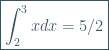
留班生重读大二 叫 (“5/2”).
Galois (Group Theory 鼻祖), Macron 总统, 都曾留班 是 “5/2”.
为何叫 “1/2”, “3/2”… , 因为 拿破仑 举办的 科举Concours 目的是 考进(integrate ) 全国最好 的 X (Ecole Polytechnique).
Calculus: integration X


鱼饭
新加坡 鱼饭,快 绝迹了。

我还记得 最后一次 1976年 和 阿公吃 午餐 “鱼饭”, 9月秋天我就飞去 法国读书6-7年,再也看不到他。
我们在 他 Arab Street 店的 后巷一个街边潮州糜摊,买一条清蒸白鲳, 价钱蛮贵的(现在也是, 生的一 Kg 卖 S$ 20+)。他不舍得吃,全让给我, 自己吃白糜, 青菜。我夹一块鱼肉给他, 他又放回我的碗里, 说:“你爱吃鱼饭, 吃多一点, 以后法国吃不到。”
阿公不爱讲话。 19岁从金门被父母推上船 独身来新加坡求生,当码头运输“苦力”,超重的扛米包 使他的背畸形的驼。那一代人 经过 英国殖民,日治,建国独立的日子,养家生活苦,他变得有点木纳。我一直和他用金门福建话聊天,他笑笑听着,但很少回话。
到法国第二年,有一晚梦到阿公好像来跟我道别。一个星期后,家里来信说阿公永远走了,爸爸说我的学业重要, 所以没叫我回来。
我之所以很怀念鱼糜,每当吃到鱼饭, 一番滋味就湧上在心头 😩。
https://vt.tiktok.com/ZSdRbmUs4/

涂鸦
(c) 2015 – 2020 Singapore 版权所有, 翻印必究
1.古诗 : [10 Aug. 2015]
SG50 Merlion Poem
七言诗《狮城颂 – 八月九日念狮城开埠父老》
Singapore 50 anniversary : Poem “Lion City”
2. 七言诗: 印尼烟霾
3. 闪小说 (Flash Fiction) 计算尺》
4. 闪小说: 《关于移民和外来人才》
5. 闪文: 《水晶包之祖孙情》
6. 闪文: “一线之差”
7. 打油诗 “2017年对联“
8. 宋词: 《潮州鱼丸面》
9. 打油诗《量力而行》
10. 宋词 : 《双茄花枝》
11. 繁体 vs 简体
12. 新冠瘟疫
Slide Rule
[闪小说] 计算尺 @ 1978

(1)
卡兹教授的鹰勾鼻子, 横扫过寂静的课室。今天化学测验, 听说是他得意的杀手锏。前几日他提醒同学们, 化学方程式要对, 否则全卷皆错 — 因为上一题的答案决定下一题的解答。环环相扣, 计算要快, 准, 考计算尺的功夫, 不能用计算机。比较法国同学精致昂贵的计算尺, 我这把中国’天津’制造的, 显得格外寒酸。
试卷分到, 大家像跑道起点的田径好手, 随着教授如同枪声般’开始’的口令, 一头栽进化学反应里。
看着密密麻麻的法文化学名词, 用刚”泡”了一年的基楚法文来读, 比土生土长的法国佬同学, 理解慢了好几拍。
10大题2小时答。我脊梁猛抽了一股寒气。窗外厚厚的白雪, 加添这’刑场’的凄凉。 心想要逃出去, 穿白袍的卡兹教授守着门口, 像只狩猎的白秃鹰, 两眼冷漠, 眈眈(\dān dān)然注视着。
(2)
我用5分钟把试卷从头到尾研究, 不管旁边法佬同学已动手, 正㗭㗭唰唰地爬着横行法文。我手里的计算尺, 下意识的放在鼻孔边嗅 — 这把中四高数第一名的奖品, 终于在异邦有用武之地。
我列出化学方程式。卡兹教授既然暗示问题不简单, 内必有乾坤。仔细平衡两边的电子数目, 果然看出机关。 料那些大意的同学, 一失足于此, 全盘皆输, 下面9题是白做了– 好残忍的卡兹教授!

躲过了这关, 信心大增, 有个好胜的意念, 要向看不起外国人的卡兹教授示威。接下来的计算, 连求e幂方 (exponential), 也难不倒我这把’小家碧玉’的计算尺。过5关斩6将, 却卡在第7题。复杂的微积分函数 (integrate function), 缠着后腿不让前进。天啊! 还剩20分钟, 难道就败于此? 冷汗湿透了微抖的双手。狗急跳墙, 绕过这题, 迎战第8题。还好! 它接下来独立于第7的证明题。’暗渡陈仓’, 大功告成! 刚用红笔框起最后一题答案, 骇人的铃声响起。课室哗然, 哀声遍野…卡兹教授的鹰勾鼻得意地朝着满脸惊吓的学生摇摆。我浑身虚脱, 脑袋空白, 披起寒袍, 赶紧走出校园, 消失在深冬的白雪里。

(3)
化学试验室里, 弗朗苏爱絲(Françoise)一边帮我搅着試管里的化学液体, 一边偷瞧卡兹教授的神情。只见他边改着上星期的卷子, 边沽喱沽喱着, 然后把改卷’砰’的丢在桌旁。 弗朗苏爱絲 轻甩右手五指 (法式”不妙”的手语, 像”烧烫”), 耸肩表示’这回惨了’。我低头专心做试验, 与世无争。突然,卡兹教授狠狠的朝我和弗朗苏爱絲这边看, 用夹着西南方腔的法语说: “你乱涂乱画 , 不整洁。奇怪! 答案全对, 准确到小数点2位!” 弗朗苏爱絲惊羡的看着我, 提醒是教授在讲我。
(4)
卡兹教授一进课室, 把书包往讲台摔。 他铁黑着脸, 大骂我们数学不精, 尤其是计算方面。然后他分发改好了的卷子, 只抽出首两卷。先走到我桌前, 递给我, 轻声说:”13.5/20, 第一名, 以后要写整洁点”, 然后递给法国人的’X’高材生 皮尔 (Pierre) : “6/20, 第二名”。 其他的人不及格。全班60人几乎全军覆没! 他意兴阑珊, 叫 ‘Z’ 班长代他继续分卷。
(5)
班级任数学課布尼诺教授紧张了。不用猜, 准是卡兹教授告的状, 说我们数学不精, 害死了化学。布尼诺教授獅子吼般的喊声 “Mon Dieu !” (老天啊 !), 叫醒同学们要加倍努力, 恢复法兰西18/19世纪数学王国的光辉。
不知谁悄悄把我的计算尺在班里传递下去欣赏。布尼诺教授发觉, 笑骂道: “不是他的’中国计算尺’好, 是他的’数学应用’强! (Mathématiques Appliqués ) “
布尼诺教授对这间’费马’ (FERMAT) 大学178年来首批华人学生, 开始另眼相看。
– [全文完]
© 9/11/2007 初稿写于 云顶度假山 (吉隆坡)
[29/5/2018 卫塞节 图文修改于’美奂’楼 (新加坡)]
[註]
1. 法国分数是 20 满分。等级如下:
A : 17 – 20 分
B : 13 – 16 分
C : 10 – 12 分
D : 7 – 9 分
E : 3 – 6 分
F : 0 – 2 分
2. 计算尺

3. 法国200年来有”数学传统” 的 工科大学 (Classe Préparatoire aux Grandes Écoles) 第一年 叫 “1/2”, 第二年 叫 “3/2”, 留级 第三年 是 “5/2“。文科大学 第一年 叫 “平方” (kharré ), 第二年 叫 “立方” (khûbe), 留级第三年是 “超立方” (hyper–khûbe)。
法国总统Macron因情所困(爱上大他27岁的女老师 – 今日的太太), 无心读书, 留班做过 hyper–khûbe 。抽象数学 鼻祖 Évariste Galois 和 法国Fields Medalist René Thom (Chaos Theory)都曾经是 “5/2″。
班长叫 “Z” (Le Z , prononcer “grand zed”, est le chef de classe. C’est l’initiale de Zident, forme réduite de Président. “Z” 来自 “Zident” – 总统 “Président” 的匿称)。”X” 是 拿波伦 建的法国第一间工程大学兼炮兵军校 École Polytechnique 的外号, 校徽有两把枪炮交叉如”X”。其教师和学生中出了许多18/19世纪的大科学家和数学宗师: Cauchy, Fourier, Lagrange, Charles Hermite, Poincaré, Louisville, Ampère, …16岁的 数学天才 Évariste Galois 连续2年入学考试不进。
Love letter to clojure Part-1
I like Lisp (or its dialect Clojure), only weakness is the lack of support in mobile platform (phones, IoT) which puts me off.
Strangely the Clojure Community keeps a deaf ear on Android, iOS!!

